
“This Generation Shall Not Pass”: Understanding Matthew 24:34 and the Signs of the Times
Among the most discussed prophetic passages in the Bible is Gospel of Matthew chapter 24. In verses 32–35, Jesus gives His disciples a powerful lesson through the parable of the fig tree and then declares:
“Verily I say unto you, This generation shall not pass, till all these things be fulfilled.” — Matthew 24:34
These words have inspired hope, debate, and deep study for centuries. What did Jesus mean by “this generation”? Was He speaking only to His disciples, or was He referring to future generations who would witness the signs of the end times?
To understand Matthew 24:34 correctly, we must read it together with verses 32, 33, and 35. When viewed in context, the message becomes clear: Jesus was teaching believers to recognize spiritual signs, remain watchful, and trust completely in the certainty of God’s Word.
The Parable of the Fig Tree
Jesus begins in Matthew 24:32 by saying:
“Now learn a parable of the fig tree; When his branch is yet tender, and putteth forth leaves, ye know that summer is nigh.”
In nature, the fig tree gives visible evidence that a new season is approaching. The leaves become signs announcing that summer is near. Jesus used this simple agricultural picture to teach a spiritual truth: believers should pay attention to the signs surrounding them.
Just as leaves reveal the coming of summer, prophetic signs reveal the nearness of Christ’s return.
Earlier in Matthew 24, Jesus described wars, famines, earthquakes, deception, persecution, and increasing lawlessness. These events are not random. They are reminders that history is moving according to God’s divine plan.
The lesson of the fig tree is not about fear. It is about awareness and readiness. Jesus wanted His followers to live with discernment rather than spiritual blindness.
“When Ye Shall See All These Things”
Verse 33 continues:
“So likewise ye, when ye shall see all these things, know that it is near, even at the doors.”
Jesus emphasized observation. “When ye shall see” points to visible signs that faithful believers would recognize. The Lord never intended His people to walk in confusion. Scripture repeatedly teaches that God reveals His purposes to those who seek Him faithfully.
The phrase “even at the doors” paints the image of someone standing immediately outside, ready to enter. Christ’s return is not presented as a distant myth but as a coming reality.
Throughout history, many generations have believed they were living near the fulfillment of biblical prophecy. Yet today, many Christians see unprecedented global conditions that closely resemble Jesus’ warnings in Matthew 24. Moral decline, international instability, spiritual deception, and hostility toward biblical truth continue to increase across the world.
Still, believers must avoid setting dates or making sensational claims. Jesus Himself taught that no one knows the exact day or hour. Instead, the focus should remain on spiritual readiness and faithful living.
What Does “This Generation” Mean?
Matthew 24:34 says:
“Verily I say unto you, This generation shall not pass, till all these things be fulfilled.”
This verse has led to several interpretations among Bible scholars and Christians.
1. The Generation Alive During the Signs
Many believers understand “this generation” to mean the generation that witnesses the fulfillment of the prophetic signs Jesus described. According to this view, once the final prophetic events begin unfolding, they will continue until completion within that same generation.
This interpretation fits naturally with the context of verses 32 and 33. Jesus compared the signs to leaves appearing on a fig tree. The people who see the signs will also witness the fulfillment.
2. The Jewish People as a Nation
Some scholars interpret “generation” as referring to the Jewish people or race. In this understanding, Jesus was declaring that Israel would never disappear before God’s prophetic promises are fulfilled.
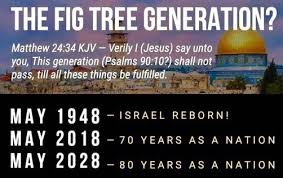
History certainly supports the miraculous preservation of the Jewish people despite centuries of persecution and exile. Many Christians view the modern restoration of Israel as prophetically significant.
3. Jesus Speaking About the Destruction of Jerusalem
Another interpretation connects Matthew 24:34 primarily to the destruction of Jerusalem in AD 70. Within approximately forty years of Jesus speaking these words, the Roman army destroyed the temple exactly as He predicted.
This historical fulfillment demonstrates the reliability of Christ’s prophecy. However, many believers also see Matthew 24 as containing both near and future fulfillments — events related to Jerusalem as well as the ultimate return of Christ.
The Eternal Authority of Christ’s Words
Verse 35 declares:
“Heaven and earth shall pass away, but my words shall not pass away.”
This is one of the strongest affirmations of divine authority found in Scripture.
Empires rise and fall. Cultures change. Human opinions shift constantly. But the words of Jesus remain eternally true.
In a world filled with uncertainty, believers can stand firmly on the promises of God. The message of Matthew 24 is ultimately not about fear of the future; it is about confidence in Christ.
Jesus assured His followers that His words are more permanent than heaven and earth themselves. That statement could only be made by One possessing divine authority.
For Christians today, this verse is a reminder that Scripture is trustworthy. God’s promises do not expire. His warnings are real, but so is His salvation.
Living Watchfully in the Last Days
The central application of Matthew 24:32–35 is spiritual preparedness.
Jesus did not give prophecy merely to satisfy curiosity. He gave it to awaken hearts. Biblical prophecy calls believers to holy living, faithful prayer, and steadfast hope.
The signs described in Scripture should encourage Christians to draw closer to God rather than become anxious. Every fulfilled prophecy strengthens confidence that God is in control of history.
Believers are called to:
- Stay spiritually alert
- Remain faithful to biblical truth
- Avoid deception
- Continue sharing the Gospel
- Live with hope in Christ’s return
The parable of the fig tree reminds us that seasons change according to God’s timing. Likewise, God’s prophetic plan unfolds exactly as He has ordained.
Faith Over Fear
Many people approach end-times prophecy with fear or confusion. Yet Jesus spoke these words to encourage believers, not terrify them.
For those who trust in Christ, prophecy is evidence that God sees the end from the beginning. Nothing happening in the world surprises Him.
The uncertainty of modern society often causes people to search for answers in politics, technology, or human systems. But Matthew 24 points us back to eternal truth.
Jesus remains the center of history and the hope of humanity.
No matter how unstable the world becomes, His promise stands firm:
“Heaven and earth shall pass away, but my words shall not pass away.”
That promise still comforts believers today just as it did the disciples nearly two thousand years ago.
Conclusion
Matthew 24:32–35 continues to speak powerfully to every generation. Through the parable of the fig tree, Jesus taught believers to recognize the signs of the times and remain spiritually awake.
The phrase “this generation shall not pass” reminds us that God’s prophetic plan will certainly come to fulfillment. While Christians may differ on specific interpretations, the central message remains unchanged: Christ’s words are true, His promises are certain, and His return is drawing nearer.
In uncertain times, believers are called not to panic but to trust. The same Savior who foretold future events also offers eternal hope to all who follow Him.
And above all, Matthew 24:35 assures us that while the world may change, the words of Jesus Christ will endure forever.
Discover more from My Blog-BesthomeBusiness
Subscribe to get the latest posts sent to your email.