
How the Entire Bible Points to Jesus
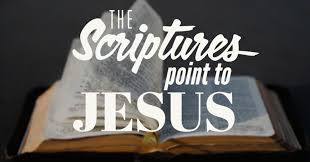
Many people think the Bible is a collection of disconnected stories, laws, poems, and historical events. Yet Jesus Himself taught that all Scripture ultimately points to Him. From the opening pages of Genesis to the final vision in Revelation, the Bible tells one unified story: God’s plan to redeem humanity through Jesus Christ.
This truth transforms the way we read Scripture. The Bible is not merely a moral handbook or a historical record. It is the story of redemption centered on Christ. Every covenant, prophecy, sacrifice, and promise finds its fulfillment in Him.
Jesus Said the Scriptures Point to Him
One of the clearest statements came directly from Jesus when speaking to religious leaders:
“You search the Scriptures because you think that in them you have eternal life; and it is they that bear witness about me.” — John 5:39
At the time Jesus said this, the New Testament had not yet been written. He was referring to the Old Testament Scriptures. According to Jesus, the Law, the Prophets, and the Writings all testify about Him.
After His resurrection, Jesus explained this truth again to His disciples:
“And beginning with Moses and all the Prophets, he interpreted to them in all the Scriptures the things concerning himself.” — Luke 24:27
Later He added:
“Everything written about me in the Law of Moses and the Prophets and the Psalms must be fulfilled.” — Luke 24:44
These verses reveal a foundational Christian belief: the entire Bible points toward Jesus Christ.
Jesus in Genesis: The Promised Seed
The story begins immediately after humanity’s fall into sin. When Adam and Eve rebelled against God, sin entered the world. Yet even in judgment, God gave a promise of hope.
Genesis 3:15 says:
“He shall bruise your head, and you shall bruise his heel.”
This verse is often called the “first gospel” because it foretells a coming Savior who would defeat Satan. Christians believe this promise is fulfilled in Jesus through His death and resurrection.
Jesus also appears symbolically throughout Genesis. Isaac, the beloved son Abraham was willing to sacrifice, foreshadows Christ carrying the wood for His own sacrifice. Joseph, betrayed by his brothers yet later becoming their deliverer, reflects Jesus being rejected and later exalted.
The themes are consistent: sacrifice, redemption, grace, and salvation through God’s chosen deliverer.
Jesus in Exodus: The Passover Lamb
The book of Exodus centers on God rescuing Israel from slavery in Egypt. Before the final plague, God instructed each family to sacrifice a spotless lamb and place its blood on their doorposts.
Exodus 12:13 says:
“When I see the blood, I will pass over you.”
This Passover lamb pointed directly to Jesus Christ. The New Testament explicitly connects Jesus to this image:
“For Christ, our Passover lamb, has been sacrificed.” — 1 Corinthians 5:7
Just as the blood of the lamb saved Israel from judgment, the blood of Jesus saves believers from sin and eternal separation from God.
The Exodus itself also reflects salvation. Israel was freed from bondage just as Christ frees humanity from slavery to sin.
Jesus in the Sacrificial System
The books of Leviticus and Numbers can seem difficult to modern readers, yet they contain powerful pictures of Christ.
The repeated animal sacrifices revealed an important truth: sin requires atonement. However, these sacrifices were temporary and incomplete.
Hebrews 10:4 explains:
“For it is impossible for the blood of bulls and goats to take away sins.”
The sacrifices pointed ahead to the perfect sacrifice Jesus would offer once and for all.
John the Baptist recognized this when he declared:
“Behold, the Lamb of God, who takes away the sin of the world!” — John 1:29
Jesus fulfilled everything the sacrificial system anticipated. He became the ultimate High Priest and the final sacrifice for sin.
Jesus in the Psalms and Wisdom Literature
The Psalms contain remarkable prophecies and descriptions fulfilled in Jesus centuries later.
Psalm 22 vividly portrays suffering that closely resembles crucifixion:
“They have pierced my hands and feet.” — Psalm 22:16
The psalm also describes soldiers dividing garments, which occurred at Jesus’ crucifixion:
“They divide my garments among them, and for my clothing they cast lots.” — Psalm 22:18
Psalm 110 presents the Messiah as both King and Priest:
“The Lord says to my Lord: ‘Sit at my right hand.’”
Jesus quoted this psalm concerning Himself in Matthew 22:44.
The wisdom literature also points toward Christ as the embodiment of divine wisdom. The New Testament calls Jesus:
“the wisdom of God.” — 1 Corinthians 1:24
Jesus in the Prophets
The prophetic books contain some of the clearest revelations of Jesus in the Old Testament.
Isaiah’s Suffering Servant
Isaiah 53 is one of the most significant messianic passages in Scripture. Written hundreds of years before Jesus’ birth, it describes His suffering and sacrificial death in astonishing detail.
“He was pierced for our transgressions; he was crushed for our iniquities.” — Isaiah 53:5
The chapter explains that the servant would suffer not for His own sins, but for the sins of others.
This prophecy aligns perfectly with the crucifixion of Christ and the Christian understanding of atonement.
Micah Foretold His Birthplace
Micah prophesied where the Messiah would be born:
“But you, O Bethlehem… from you shall come forth for me one who is to be ruler in Israel.” — Micah 5:2
Jesus was born in Bethlehem exactly as foretold.
Zechariah Predicted His Entry
Zechariah described the Messiah entering Jerusalem on a donkey:
“Behold, your king is coming to you… humble and mounted on a donkey.” — Zechariah 9:9
Jesus fulfilled this prophecy during His triumphal entry before His crucifixion.
The prophets consistently pointed toward a coming Redeemer, King, and Savior fulfilled in Christ.
Jesus in the Gospels
The New Testament reveals Jesus openly and fully.
Matthew presents Him as the promised King descended from David. Mark emphasizes His authority and servanthood. Luke highlights His humanity and compassion. John focuses on His divine identity.
John begins with these profound words:
“In the beginning was the Word, and the Word was with God, and the Word was God.” — John 1:1
Jesus is not merely another prophet or teacher. He is God incarnate entering human history to save humanity.
The Gospels demonstrate how Jesus fulfilled countless Old Testament prophecies through His life, ministry, death, and resurrection.
Jesus in Acts and the Epistles
After Jesus’ resurrection, the apostles preached Christ as the fulfillment of Scripture.
Peter declared:
“There is salvation in no one else.” — Acts 4:12
Paul taught that all God’s promises find their “Yes” in Christ:
“For all the promises of God find their Yes in him.” — 2 Corinthians 1:20
The epistles explain the meaning of Jesus’ death and resurrection. Through Christ, believers are forgiven, reconciled to God, adopted into His family, and given eternal life.
The New Testament writers continually connected Jesus back to Old Testament promises, proving the unity of Scripture.
Jesus in Revelation: The Returning King
The Bible concludes with Jesus reigning victorious.
In Revelation, He is called:
“the Alpha and the Omega, the first and the last, the beginning and the end.” — Revelation 22:13
The Lamb who was slain becomes the conquering King. Sin, death, and evil are defeated forever.
Revelation reveals the completion of the story begun in Genesis. Humanity lost fellowship with God in Eden, but through Jesus, eternal fellowship is restored.
The Bible’s final message is not despair but hope centered in Christ.
Why This Matters
Understanding that the entire Bible points to Jesus changes how we approach Scripture and faith.
1. It Reveals God’s Unified Plan
The Bible was written across centuries by many authors, yet it tells one consistent story of redemption. This unity strengthens confidence in the reliability and divine inspiration of Scripture.
2. It Deepens Faith
Seeing Jesus throughout the Bible reveals God’s sovereignty and faithfulness. Prophecies fulfilled in Christ demonstrate that God keeps His promises.
3. It Centers Christianity on Christ
Christianity is ultimately about Jesus, not merely religion or morality. The entire Bible directs readers toward a relationship with Him.
4. It Gives Hope
Every major biblical theme—sacrifice, redemption, covenant, kingdom, grace, and restoration—finds fulfillment in Jesus. Through Him, believers receive forgiveness, purpose, and eternal hope.
Conclusion
The Bible is one grand story pointing to Jesus Christ. From Genesis to Revelation, Scripture consistently reveals God’s plan to rescue humanity through His Son.
Jesus is the promised seed, the Passover Lamb, the suffering servant, the perfect sacrifice, the risen Savior, and the coming King. The Old Testament anticipates Him, the Gospels reveal Him, the epistles explain Him, and Revelation celebrates His eternal reign.
When we read the Bible through this lens, every page gains deeper meaning. The Scriptures are not random writings disconnected from one another—they are a unified testimony to Jesus Christ, the center of God’s redemptive story.
As Jesus Himself said:
“These are the very Scriptures that testify about me.” — John 5:39
How You Can Support This Mission
If these messages have blessed you, strengthened your faith, or helped you understand God’s Word, you can become part of this mission.
Your support helps:
👉 Support this mission here:
https://besthomebusines.betterworld.org/donate
- Create more Bible teachings
- Produce prophecy-based Christian content
- Spread the Gospel to more people around the world
- Continue warning and preparing souls for the Lord’s return
🙏 Every donation, no matter how small, helps this ministry continue.
A Final Encouragement
Do not be afraid of the last days.
For the believer, they are not a time of fear —
they are a time of hope.Jesus is not coming to destroy His people.
He is coming to receive His bride.📖 “Let not your heart be troubled… I will come again and receive you to Myself.” – John 14:1–3
Stay faithful.
Stay awake.
Stay ready.May the Lord strengthen you, guide you, and keep you until the day of His glorious return.
✝️ Maranatha — Come, Lord Jesus.
Stay Connected & Grow in Faith
Thank you for taking time to read this message. God’s Word continues to speak beyond the written page—through worship, teaching, and faithful voices that proclaim His truth.
We invite you to stay connected with our ministry through our Christian Radio: Radio Christian Truth and Christian TV: Faros TV,where you’ll find Christ-centered worship, biblical teaching, and encouraging programs designed to strengthen your faith and deepen your walk with Jesus.
🎧 Listen to Christian Radio
📺 Watch Christian TVMay the Lord bless you as you seek Him daily, and may His Word guide, encourage, and transform your life.
Make Today Great (affirmation square sticker)
Discover more from My Blog-BesthomeBusiness
Subscribe to get the latest posts sent to your email.