
Sighing in Hope: Lessons from Nepali Christians on Romans 8:20-25
Introduction: A Suffering Member of the Body
In January 2026, Open Doors released its annual World Watch List. Nepal—the Himalayan nation—returned to the list after a three-year absence. The reason was clear: violence against Christians was on the rise.
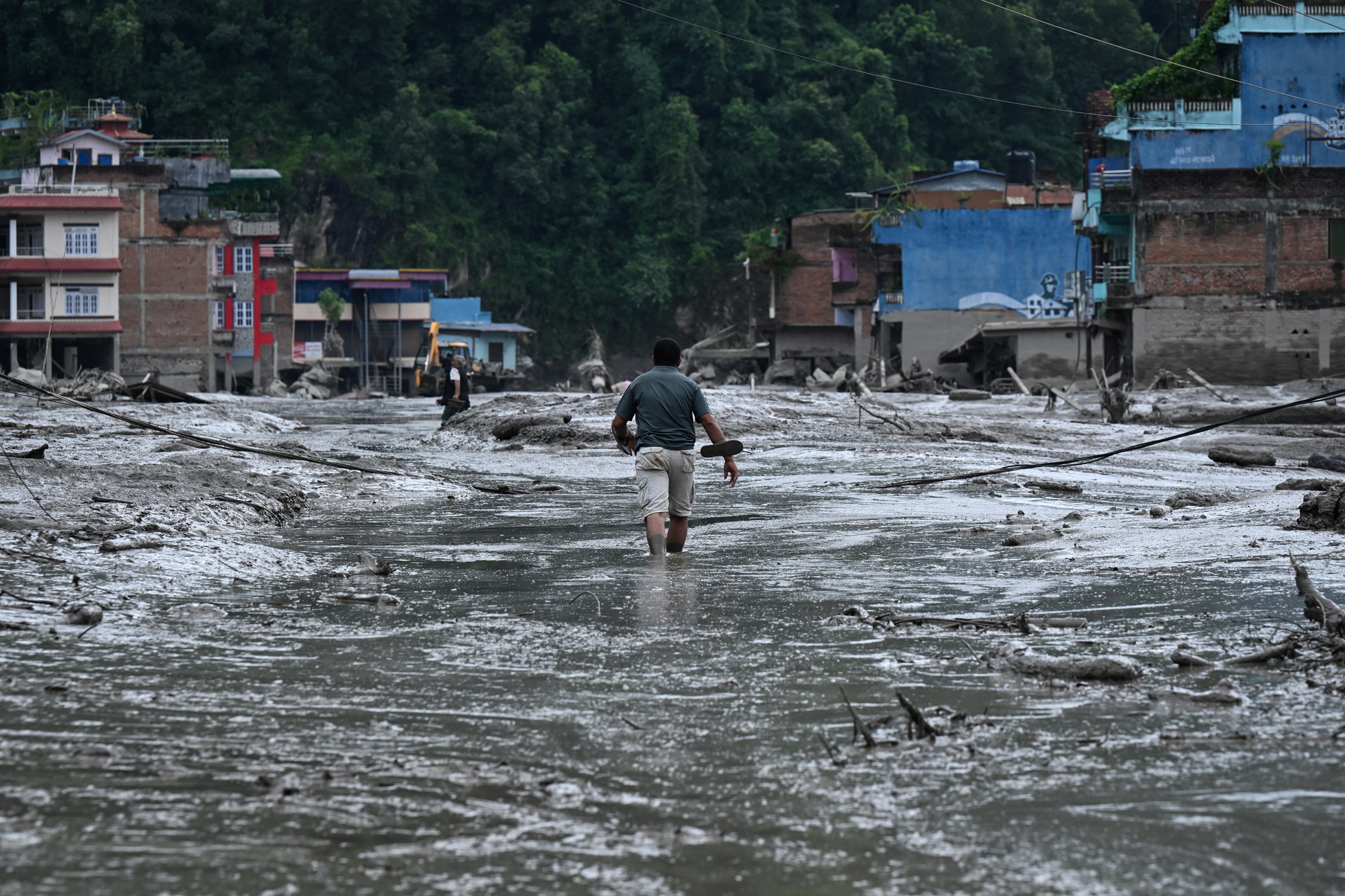
Simultaneously, on August 26, 2026, northern Nepal was devastated by catastrophic flooding. An ice burst triggered floods that wiped out entire towns. The World Evangelical Alliance reported that out of six registered churches in Timure, two were completely destroyed. Christian relief organizations reported that the death toll among believers alone had surpassed 125.
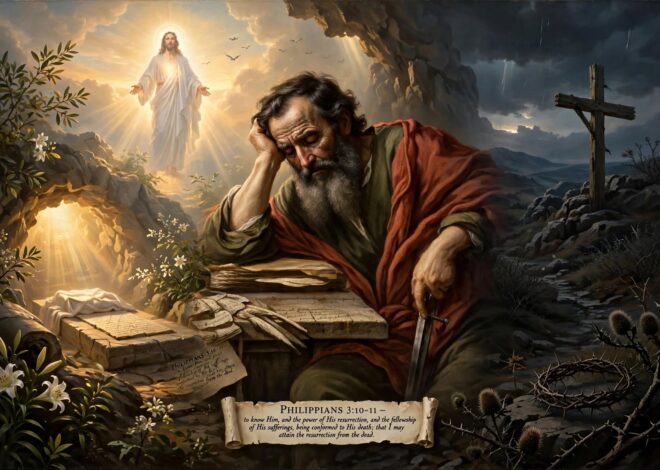
Behind these headlines are real people—flesh-and-blood brothers and sisters bearing the weight of this fallen world. Their plight brings to life the profound imagery the Apostle Paul paints in Romans 8:20-25: the “creation subjected to futility,” groaning and travailing together, yet waiting in “hope” for the day of redemption.
I. The Groaning of Creation: The Reality for Nepali Christians
Paul writes: “For the creation was subjected to futility, not willingly, but because of Him who subjected it, in hope that the creation itself also will be set free from its slavery to corruption into the freedom of the glory of the children of God.” (Rom 8:20-21)
Nepali Christians are deeply experiencing this “futility” and “slavery to corruption.” In a nation of approximately 31.5 million people, Christians make up less than 2%. Although Nepal declared itself a secular federal republic in 2015, the revised Criminal Code of 2017 (Section 158) criminalizes “proselytizing,” punishable by up to five years in prison and a fine of up to 50,000 Nepalese rupees (approximately 326 USD).
The vagueness of this law is staggering. It prohibits any act that “persuades” another to convert but fails to define what “persuasion” legally means. Consequently, it has become a net to trap Christians arbitrarily.
In December 2024, Pastor Janmajaya Bhattarai was distributing Christmas gifts at a school when he was accused of “conversion” for sharing a Christmas greeting and religious information. He was held in custody for about three weeks. After his release in January 2025, he endured a grueling 15-month legal battle, only being acquitted in March 2026 due to lack of evidence.
Even more heartbreaking is the story from October 2025, when about 20 Hindu extremists stormed a home church gathering led by Pastor Rambahadur. They dragged him outside, kicking and beating him for nearly an hour until he lost consciousness. The attackers ordered him to stop all Christian activities and close the gathering place. Yet, upon regaining consciousness, this pastor spoke a staggering truth: “After this attack, I have overcome fear and am even more motivated to serve Christians in this district—even if it is dangerous.”
The sisters are suffering too. In February 2025, a female believer named Tara was brutally beaten by her husband for her faith in Christ. In Nepal, those who convert from Hinduism are especially vulnerable—they face not only social ostracism but intense pressure from their families and communities.
“The creation was subjected to futility” —this finds its cruelest expression in Nepal. Yet Paul immediately follows with: “but the creation itself also will be set free…”
II. The Anchor of Hope: Holding Fast in Affliction
“For we know that the whole creation groans and suffers the pains of childbirth together until now. And not only this, but also we ourselves, having the first fruits of the Spirit, even we ourselves groan within ourselves, waiting eagerly for our adoption as sons and daughters, the redemption of our body.” (Rom 8:22-23)
The groaning is real, but the hope is equally real.
Nepali Christians are not passively enduring suffering. They act amidst the groaning and stand firm in hope. In September 2025, Nepal erupted in massive, Gen-Z-led protests that eventually led to the Prime Minister’s resignation. Amidst this turmoil, Nepal’s Christians—a minority comprising less than 2% of the population—chose engagement over retreat.
In Kathmandu, Ritesh Gurung, a 24-year-old Christian university student, coordinated emergency medical supplies and updated foreign journalists via VPNs. In Pokhara, Christian volunteers set up temporary food stations. In Biratnagar, church youth helped clear debris after clashes. One pastor remarked: “We have lived in the shadows too long. But when the streets burn and young people bleed, silence is not an option.”
More movingly, as fear gripped the nation, churches from various denominations opened their doors—not for political resistance, but for prayer.
During the August 2026 floods, the Nepali church once again demonstrated this “action within groaning.” The National Churches Fellowship and the Nepal Christian Council launched emergency relief operations from Kathmandu. With roads and bridges destroyed, assessment and rescue teams rode mountain bicycles to reach isolated communities. The Catholic Church, despite having only about 10,000 believers in the country, mobilized to provide food, basic supplies, and temporary shelter.
These brothers and sisters in Nepal embody what it means to “rejoice in hope, be patient in tribulation” (Rom 12:12).
III. Patient Waiting: How Should We Prepare?
“For in hope we were saved. Now hope that is seen is not hope; for who hopes for what he sees? But if we hope for what we do not see, we wait for it with patience.” (Rom 8:24-25)
Here, Paul highlights a critical spiritual logic: True hope always points to the unseen. If suffering and persecution are “seen,” then our hope must transcend them—pointing to the glory of the “redemption of our bodies” at Christ’s return.
What does this mean practically for Christians today—whether in Nepal or anywhere else in the world?
First, we must unite with suffering members through prayer. Open Doors calls believers to pray for Nepali converts—who are often targeted by family, community, and local authorities; for national stability—as political turmoil provides cover for extremists to attack Christians without consequence; and for the hearts of persecutors to turn. Our prayers are not distant sympathy but spiritual solidarity—“If one member suffers, all suffer together” (1 Cor 12:26).
Second, we must prepare our own hearts for potential suffering. Open Doors provides “persecution preparedness training” for local Christians in Nepal. This isn’t fear-mongering; it is spiritual wisdom. We live in a world increasingly hostile to Christian faith—whether through legal suppression or social rejection. We must ask ourselves: Is my faith rooted deeply enough? When the test comes, can I say with Pastor Rambahadur, “I have overcome fear”?
Third, we must live out the “already but not yet” hope in daily life. Paul says we have the “first fruits of the Spirit”—the Spirit has begun the glorious work in us, but it is not yet complete. This means we honestly face the brokenness of the world (groaning) while confidently expecting future perfection (hope). Nepali Christians rescuing neighbors in floods, opening doors for prayer in turmoil, and refusing to stop evangelism under persecution—this is the “already but not yet” witness.
Conclusion: The Glory That Will Be Revealed
Dear brothers and sisters, the story of Nepal is a microcosm of our times. Creation groans—climate disasters, political turmoil, religious persecution, family breakdown. But right within that groaning, the Holy Spirit is working, the Church is growing, and hope is being lived out.
Nepal’s Christian population has grown rapidly over the past two decades. Persecution has not extinguished the church; it has purified it and made it more resilient. As one Nepali church leader declared: “God’s work there cannot be stopped.”
This echoes the early church—where, under Roman persecution, the blood of martyrs became the seed of the church. Today, the persecuted church in Nepal, and globally, is writing the same story.
“For I consider that the sufferings of this present time are not worthy to be compared with the glory that is to be revealed to us.” (Rom 8:18)
May we support our suffering brothers and sisters through prayer, cling to the unseen hope by faith, and patiently wait for the coming glory. For He who raised Christ from the dead will also give life to our mortal bodies—“the redemption of our bodies” —and that day is near.
Amen.
Now thanks be unto God, which always causeth us to triumph in Christ (2 Corinthians 2:14).
God gets His greatest victories out of apparent defeats. Very often the enemy seems to triumph for a little, and God lets it be so; but then He comes in and upsets all the work of the enemy, overthrows the apparent victory, and as the Bible says, "turns the way of the wicked upside down." Thus He gives a great deal larger victory than we would have known if He had not allowed the enemy, seemingly, to triumph in the first place.
The story of the three Hebrew children being cast into the fiery furnace is a familiar one. Here was an apparent victory for the enemy. It looked as if the servants of the living God were going to have a terrible defeat. We have all been in places where it seemed as though we were defeated, and the enemy rejoiced. We can imagine what a complete defeat this looked to be. They fell down into the flames, and their enemies watched them to see them burn up in that awful fire, but were greatly astonished to see them walking around in the fire enjoying themselves. Nebuchadnezzar told them to "come forth out of the midst of the fire." Not even a hair was singed, nor was the smell of fire on their garments, "because there is no other god that can deliver after this sort."
This apparent defeat resulted in a marvelous victory.
Suppose that these three men had lost their faith and courage, and had complained, saying, "Why did not God keep us out of the furnace!" They would have been burned, and God would not have been glorified. If there is a great trial in your life today, do not own it as a defeat, but continue, by faith, to claim the victory through Him who is able to make you more than conqueror, and a glorious victory will soon be apparent. Let us learn that in all the hard places God brings us into, He is making opportunities for us to exercise such faith in Him as will bring about blessed results and greatly glorify His name.
Discover more from My Blog-BesthomeBusiness
Subscribe to get the latest posts sent to your email.