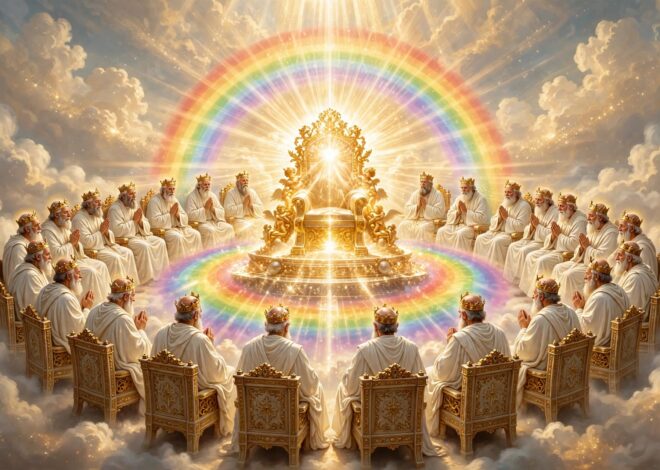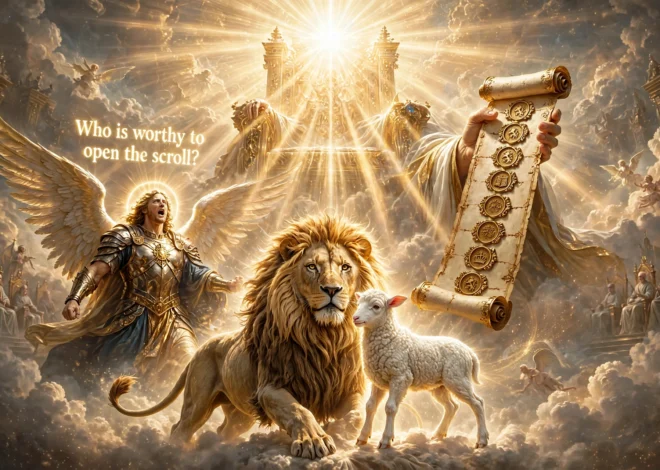

The Groaning of Creation and the Hope of Glory A Deep Meditation on Romans 8:18-33
Introduction: A World That Is Groaning
We live in an age of profound contradiction. Turn on the news, and you are met with extreme climates, mass extinctions, war, conflict, and social injustice. Look around your own life, and you find sickness, aging, loss, and anxiety lurking at every corner. The entire world seems to be emitting a silent, yet agonizing, moan.
Nearly two thousand years ago, the Apostle Paul captured this raw reality. In the eighth chapter of Romans, he penned these staggering words: “For we know that the whole creation has been groaning together in the pains of childbirth until now” (Rom. 8:22).
Yet, Paul does not leave us in the mire of despair. He unveils a deeper mystery: the groaning of creation is not a death rattle of hopelessness; it is the pain of childbirth—agony that is actively birthing a new reality.
I. The Calculus of Suffering and Glory (8:18)
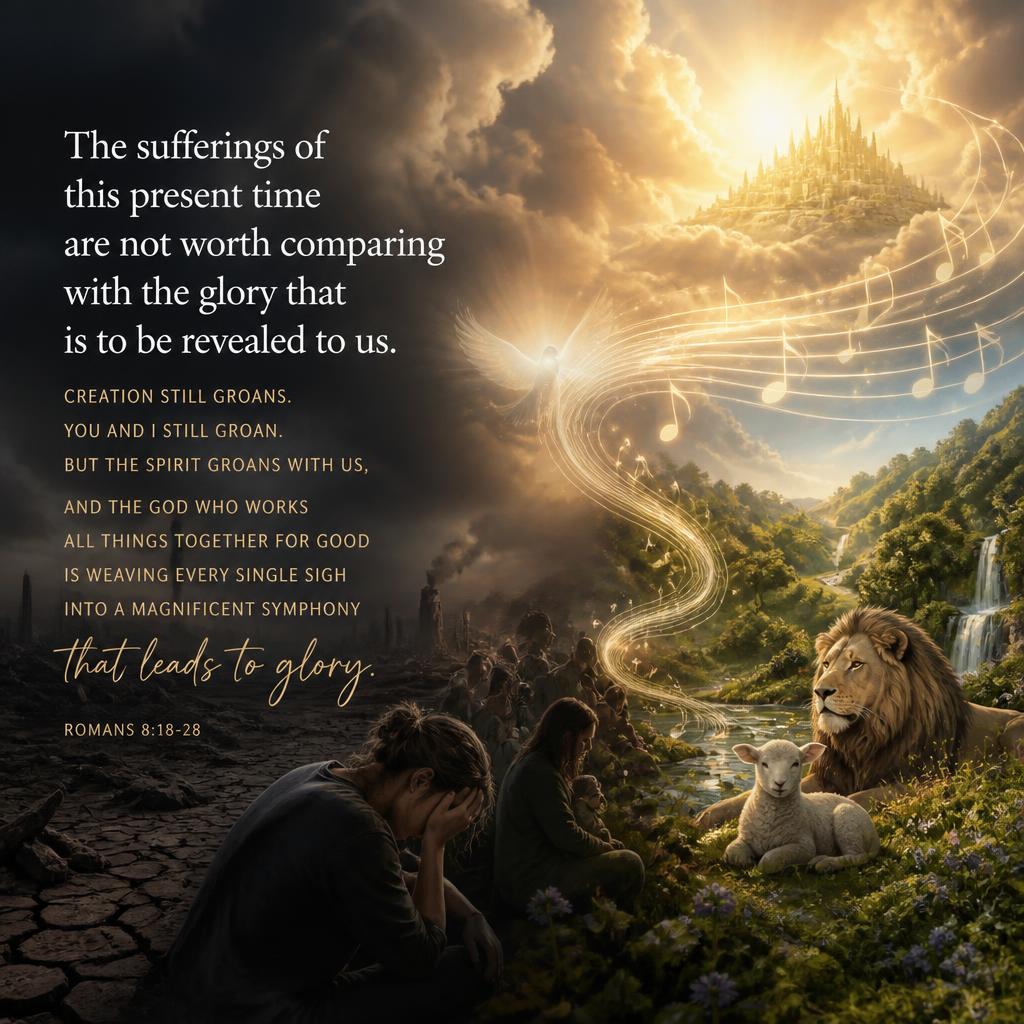
Paul opens with a thunderous declaration: “For I consider that the sufferings of this present time are not worth comparing with the glory that is to be revealed to us” (Rom. 8:18).
This is not a dismissal of human pain but a sober recognition of divine glory. The Greek word Paul uses, logizomai, is an accounting term meaning “to reckon” or “to calculate.” He invites his readers to do a spiritual math problem: take all the suffering of this present age, place it on one side of the scale, and place the coming glory on the other. The result is that the weight of glory infinitely outweighs the temporality of pain.
As scholar Douglas Moo notes, “sufferings” here does not merely refer to persecution for faith; it encompasses sickness, bereavement, economic hardship, and even death itself. In other words, the root of all human suffering is inextricably linked to the groaning of the created order.
II. The Eager Expectation of Creation (8:19)
Verse 19 features an incredibly vivid Greek word: apokaradokia. It is a compound word derived from apo (away from), kara (head), and dokeo (to watch). Literally, it means “to stretch the neck forward, craning one’s head to look ahead.”
Paul personifies creation, giving it the posture of “eager expectation.” The entire natural world—mountains, oceans, forests, and animals—is straining its neck to witness one event: the revealing of the sons of God.
What does this imply? The destiny of creation is intimately tied to the destiny of God’s children. The fall of humanity brought a curse upon the earth (Gen. 3:17-19); conversely, the redemption of humanity will usher in the liberation of all creation.
III. The Root of Creation’s Frustration (8:20-21)
Paul explains why creation groans:
“For the creation was subjected to futility, not willingly, but because of him who subjected it, in hope that the creation itself will be set free from its bondage to corruption and obtain the freedom of the glory of the children of God” (Rom. 8:20-21).
“Futility” (mataiotes) refers to a state of meaninglessness, purposelessness, and transience. Creation did not choose this state voluntarily—it was human choice that dragged the entire cosmos into the vortex of the fall.
However, even within the pronouncement of the curse, God had planted a seed of hope. The word “hope” indicates that creation’s groaning is not a wail of despair, but a birth pang. It “hopes” to one day be set free from its “bondage to corruption” (the cycle of death and decay) and to enter into “the freedom of the glory of the children of God.”
IV. The Triple Groan: Creation, Believers, and the Spirit (8:22-27)
Romans 8:18-27 unveils a stunning three-fold groaning structure:
1. The Groaning of Creation (8:22)
“For we know that the whole creation has been groaning together in the pains of childbirth until now.”
The Greek uses two verbs with the prefix syn- (together)—systenazō (to groan together) and synōdinō (to travail together in birth). This paints a picture of a symphonic collective groan: all of nature is harmonizing in pain.
The childbirth metaphor is crucial: labor pains, though intense, herald the arrival of new life. The suffering of creation is not the final destination; it is the necessary passage to the new heavens and the new earth.
2. The Groaning of Believers (8:23)
“And not only the creation, but we ourselves, who have the firstfruits of the Spirit, groan inwardly as we wait eagerly for adoption as sons, the redemption of our bodies.”
The groaning of believers echoes the groaning of creation. Although we possess the Holy Spirit as the “firstfruits” (the down payment and foretaste of future glory), we still experience weakness, sickness, and death in this present life.
“Redemption of our bodies” refers to the future resurrection and glorification of our physical flesh. This is the ultimate goal of Christian hope—not just the salvation of the soul, but the redemption of the whole person, including the material body.
3. The Groaning of the Spirit (8:26)
“Likewise the Spirit helps us in our weakness. For we do not know what to pray for as we ought, but the Spirit himself intercedes for us with groanings too deep for words.”
The most astonishing revelation is this: even the Holy Spirit “groans.” The Almighty God does not stoically observe creation’s suffering from a distance—He enters into it, groaning alongside us.
This triple groaning paints a profound picture: Creation groans, believers groan, and the Holy Spirit groans—the entire universe is in labor, awaiting its final deliverance.
V. All Things Work Together for Good (8:28-30)
Right in the depths of this groaning, Paul inserts a pillar of comfort:
“And we know that for those who love God all things work together for good, for those who are called according to his purpose” (Rom. 8:28).
“All things”—including suffering, frustration, loss, and failure—are woven together by God’s sovereignty into His redemptive plan. This does not mean that suffering itself is “good,” but rather that God is able to make all things serve the ultimate good of those who love Him.
Paul then outlines the golden chain of salvation:
“For those whom he foreknew he also predestined to be conformed to the image of his Son… And those whom he predestined he also called, and those whom he called he also justified, and those whom he justified he also glorified” (Rom. 8:29-30).
From eternal “foreknowledge” to final “glorification,” God’s redemptive plan is unshakably secure. The groaning of creation is not a sign that God has lost control; it is an integral part of His grand narrative.
VI. The Relevance of This Passage for Today
1. A Theological Foundation for Ecological Concern
Romans 8:19-22 provides the most robust theological foundation for Christian environmentalism. Creation is not a resource to be exploited; it is a partner in destiny with humanity, groaning and hoping together.
The environmental crisis is not merely a political or technological issue; it is a spiritual issue—rooted in human sin and our betrayal of the created order. Christian environmental action is not a “secular” side-project; it is participating in God’s sacred mission to restore creation.
2. Hope in the Midst of Personal Suffering
In your personal pain, this passage tells you: your groaning is not solitary. Creation groans with you, and the Spirit groans with you—the entire cosmos is in sync with your pain. And all this groaning will ultimately culminate in a symphony of glory.
3. The Tension of the “Already” and the “Not Yet”
Christians live in the tension of the “already” and the “not yet.” We are already saved, already have the Spirit, and already justified—but we are not yet fully redeemed, not yet bodily resurrected, and not yet in full glory. This very tension is the breeding ground of hope.
Conclusion: From Groaning to Glory
Romans 8:18-33 begins with a contrast (suffering vs. glory) and ends with an unshakable assurance (God’s sovereign predestination and keeping power). In the middle lies groaning—the triple groan of creation, believers, and the Spirit.
But Paul wants us to see this clearly: groaning is not the final word. After labor pains comes the cry of a newborn. After the death of the cross comes the dawn of the resurrection. After the groaning of this present age comes the “glory that is to be revealed to us.”
As Paul wrote: “The sufferings of this present time are not worth comparing with the glory that is to be revealed to us.”
Creation still groans. You and I still groan. But the Spirit groans with us, and the God who works all things together for good is weaving every single sigh into a magnificent symphony that leads to glory.
“Amen. Come, Lord Jesus!” (Rev. 22:20)
Now thanks be unto God, which always causeth us to triumph in Christ (2 Corinthians 2:14).
God gets His greatest victories out of apparent defeats. Very often the enemy seems to triumph for a little, and God lets it be so; but then He comes in and upsets all the work of the enemy, overthrows the apparent victory, and as the Bible says, "turns the way of the wicked upside down." Thus He gives a great deal larger victory than we would have known if He had not allowed the enemy, seemingly, to triumph in the first place.
The story of the three Hebrew children being cast into the fiery furnace is a familiar one. Here was an apparent victory for the enemy. It looked as if the servants of the living God were going to have a terrible defeat. We have all been in places where it seemed as though we were defeated, and the enemy rejoiced. We can imagine what a complete defeat this looked to be. They fell down into the flames, and their enemies watched them to see them burn up in that awful fire, but were greatly astonished to see them walking around in the fire enjoying themselves. Nebuchadnezzar told them to "come forth out of the midst of the fire." Not even a hair was singed, nor was the smell of fire on their garments, "because there is no other god that can deliver after this sort."
This apparent defeat resulted in a marvelous victory.
Suppose that these three men had lost their faith and courage, and had complained, saying, "Why did not God keep us out of the furnace!" They would have been burned, and God would not have been glorified. If there is a great trial in your life today, do not own it as a defeat, but continue, by faith, to claim the victory through Him who is able to make you more than conqueror, and a glorious victory will soon be apparent. Let us learn that in all the hard places God brings us into, He is making opportunities for us to exercise such faith in Him as will bring about blessed results and greatly glorify His name.
Discover more from My Blog-BesthomeBusiness
Subscribe to get the latest posts sent to your email.