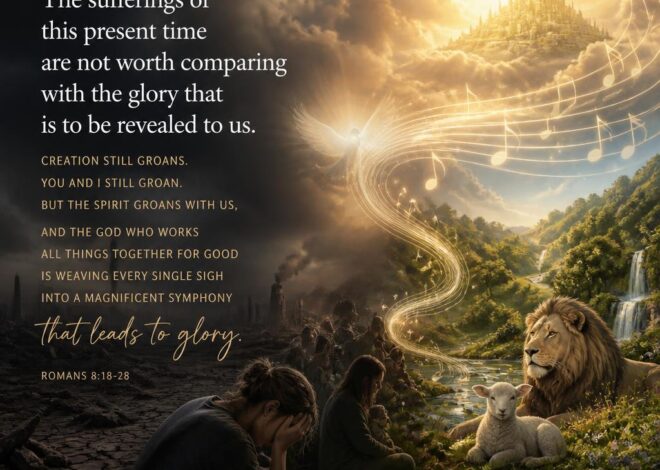


Isaiah 61:1–2: The Year of the Lord’s Favor—Good News for the Brokenhearted and Hope for the Captives
“The Spirit of the Sovereign LORD is upon me, because the LORD has anointed me to proclaim good news to the poor. He has sent me to bind up the brokenhearted, to proclaim liberty to the captives and the opening of the prison to those who are bound; to proclaim the year of the LORD’s favor…” (Isaiah 61:1–2)
Among the most comforting and hope-filled prophecies in the Bible is Isaiah 61. Written nearly 700 years before the birth of Jesus Christ, this passage foretells the mission of the coming Messiah. It describes a Savior who would bring hope instead of despair, healing instead of brokenness, freedom instead of bondage, and God’s grace instead of condemnation.
When Jesus began His earthly ministry, He entered the synagogue in Nazareth and read these very words from the scroll of Isaiah. Then He made an astonishing declaration:
“Today this Scripture is fulfilled in your hearing.” (Luke 4:21)
With these words Jesus identified Himself as the promised Messiah.
Isaiah 61 is therefore not only a prophecy—it is a portrait of Christ and His continuing work in the lives of believers today.
The Spirit of the Lord Is Upon Me
The prophecy begins:
“The Spirit of the Sovereign LORD is upon me.”
Jesus’ ministry was empowered by the Holy Spirit. At His baptism the Holy Spirit descended upon Him like a dove (Matthew 3:16), publicly confirming His divine mission.
Everything Jesus did—His miracles, teachings, compassion, healing, and sacrifice—flowed from His perfect obedience to the Father through the power of the Holy Spirit.
Today, every believer also receives the Holy Spirit, who enables us to continue Christ’s mission by sharing the Gospel, comforting the hurting, and living holy lives.
Good News to the Poor
The Messiah would bring “good news to the poor.”
The poor are not merely those lacking money. Throughout Scripture they also represent those who recognize their spiritual need.
Jesus echoed this truth in the Beatitudes:
“Blessed are the poor in spirit, for theirs is the kingdom of heaven.” (Matthew 5:3)
The Gospel is good news because no one is too sinful, too broken, or too forgotten for God’s grace.
Whether someone is poor financially, emotionally exhausted, spiritually empty, or burdened by guilt, Christ offers forgiveness, eternal life, and a new beginning.
Healing the Brokenhearted
One of the greatest wounds people carry cannot be seen.
Broken hearts come from:
- loss of loved ones
- betrayal
- divorce
- rejection
- loneliness
- disappointment
- failure
- abuse
- grief
- guilt over sin
Modern society offers temporary distractions, but only Jesus truly heals the human heart.
David wrote:
“The LORD is near to the brokenhearted and saves those who are crushed in spirit.” (Psalm 34:18)
Christ never ignores broken people.
Throughout the Gospels He sought out those whom society rejected—the widow, the leper, the sinner, the blind, the tax collector, and the outcast.
His compassion remains the same today.
Liberty for the Captives
Isaiah next proclaims freedom for captives.
Not every prison has iron bars.
Millions today are imprisoned by:
- sin
- fear
- addiction
- bitterness
- pornography
- greed
- anxiety
- depression
- unforgiveness
- shame
Jesus came to break chains.
When Christ forgives sins, He also breaks the power of sin over our lives.
The Apostle Paul declared:
“It is for freedom that Christ has set us free.” (Galatians 5:1)
Many people think Christianity is about rules.
In reality, it is about freedom—the freedom to become the person God created us to be.
Opening the Prison Doors
Isaiah speaks of opening prison doors.
Some prisons are self-made.
People imprison themselves with regret.
Others remain trapped by painful memories or past mistakes.
Still others are enslaved by lies:
“I’m worthless.”
“God could never forgive me.”
“I’ll never change.”
Jesus breaks every one of these chains through the truth of His Word.
He said:
“You shall know the truth, and the truth shall make you free.” (John 8:32)
Freedom begins when we believe what God says instead of what fear tells us.
The Year of the Lord’s Favor
Perhaps the most beautiful phrase in Isaiah 61 is:
“To proclaim the year of the LORD’s favor.”
This refers to God’s season of grace.
Many scholars connect it with the Old Testament Year of Jubilee (Leviticus 25).
Every fiftieth year:
- debts were cancelled
- slaves were released
- land was restored
- families received new beginnings
The Year of Jubilee pointed prophetically to Jesus Christ.
Through Him:
- our debt of sin is cancelled
- Satan’s slavery is broken
- our inheritance is restored
- we become children of God
Today we live in the age of God’s grace, during which salvation is freely offered to everyone who believes in Jesus Christ.
Why Jesus Stopped Reading
Interestingly, when Jesus read Isaiah 61 in Luke 4, He stopped in the middle of verse 2.
He read:
“To proclaim the year of the Lord’s favor…”
But He did not continue with:
“…and the day of vengeance of our God.”
Why?
Because His first coming focused on salvation.
His mission was to seek and save the lost.
The “day of vengeance” points to His Second Coming, when He will judge evil, establish righteousness, and reign as King of kings.
Today is still the day of grace.
Tomorrow is never guaranteed.
The invitation to receive Christ remains open, but Scripture reminds us that a day of judgment will also come.
A Message for Today’s World
Never has Isaiah 61 been more relevant.
Our world is experiencing:
- wars
- economic uncertainty
- family breakdown
- depression
- loneliness
- addiction
- fear
- spiritual confusion
Technology has connected people digitally while leaving many emotionally isolated.
People search everywhere for peace, yet peace is found only in Jesus Christ.
The Gospel remains God’s answer for humanity.
Christ still heals.
Christ still forgives.
Christ still restores.
Christ still sets captives free.
Our Calling as Christians
Isaiah 61 is also a mission statement for believers.
Because Christ has transformed us, we are called to share His compassion.
We are called to:
- encourage the discouraged
- comfort the grieving
- share the Gospel
- help the poor
- pray for the sick
- forgive those who hurt us
- show God’s love in practical ways
Every Christian becomes an ambassador of Christ’s Kingdom.
The Church should be known as a place where broken people find hope.
The Invitation of Grace
Isaiah’s prophecy reminds us that no one is beyond God’s mercy.
Perhaps you feel spiritually poor.
Perhaps your heart has been shattered.
Perhaps you feel trapped by sin or fear.
Jesus is still proclaiming the year of the Lord’s favor.
His invitation remains:
“Come to Me.”
He offers forgiveness instead of guilt.
Peace instead of anxiety.
Hope instead of despair.
Life instead of death.
The Gospel is not merely information—it is transformation.
Those who surrender to Christ discover that the chains of sin are broken, the wounds of the heart begin to heal, and the future becomes filled with eternal hope.
Conclusion
Isaiah 61:1–2 reveals the heart of God toward humanity. Long before Jesus walked the roads of Galilee, the prophet foretold a Messiah who would bring good news to the poor, healing to the brokenhearted, liberty to captives, and freedom to prisoners. Jesus fulfilled this prophecy perfectly, and He continues to fulfill it today through the transforming power of the Gospel.
The “year of the Lord’s favor” is a season of divine grace that is still open. Every person who comes to Christ in faith can experience forgiveness, restoration, and new life. Yet the Bible also reminds us that this age of grace will one day give way to the return of Christ and the establishment of His righteous kingdom.
Now is the time to receive His mercy. Now is the time to trust in the Savior who heals every wound, breaks every chain, and offers eternal hope. May we not only rejoice in His favor but also faithfully proclaim His good news to a world longing for freedom, healing, and peace.
Now thanks be unto God, which always causeth us to triumph in Christ (2 Corinthians 2:14).
God gets His greatest victories out of apparent defeats. Very often the enemy seems to triumph for a little, and God lets it be so; but then He comes in and upsets all the work of the enemy, overthrows the apparent victory, and as the Bible says, "turns the way of the wicked upside down." Thus He gives a great deal larger victory than we would have known if He had not allowed the enemy, seemingly, to triumph in the first place.
The story of the three Hebrew children being cast into the fiery furnace is a familiar one. Here was an apparent victory for the enemy. It looked as if the servants of the living God were going to have a terrible defeat. We have all been in places where it seemed as though we were defeated, and the enemy rejoiced. We can imagine what a complete defeat this looked to be. They fell down into the flames, and their enemies watched them to see them burn up in that awful fire, but were greatly astonished to see them walking around in the fire enjoying themselves. Nebuchadnezzar told them to "come forth out of the midst of the fire." Not even a hair was singed, nor was the smell of fire on their garments, "because there is no other god that can deliver after this sort."
This apparent defeat resulted in a marvelous victory.
Suppose that these three men had lost their faith and courage, and had complained, saying, "Why did not God keep us out of the furnace!" They would have been burned, and God would not have been glorified. If there is a great trial in your life today, do not own it as a defeat, but continue, by faith, to claim the victory through Him who is able to make you more than conqueror, and a glorious victory will soon be apparent. Let us learn that in all the hard places God brings us into, He is making opportunities for us to exercise such faith in Him as will bring about blessed results and greatly glorify His name.
Discover more from My Blog-BesthomeBusiness
Subscribe to get the latest posts sent to your email.

Related Posts
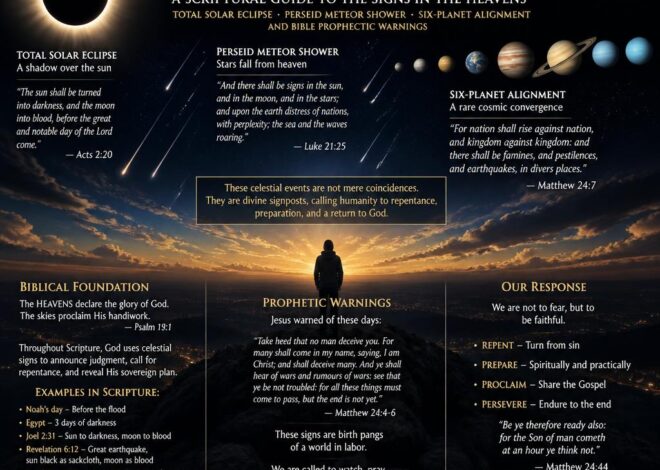
Signs in the Heavens: What Does the Bible Say About the Solar Eclipse, Meteor Shower, and Six-Planet Alignment?
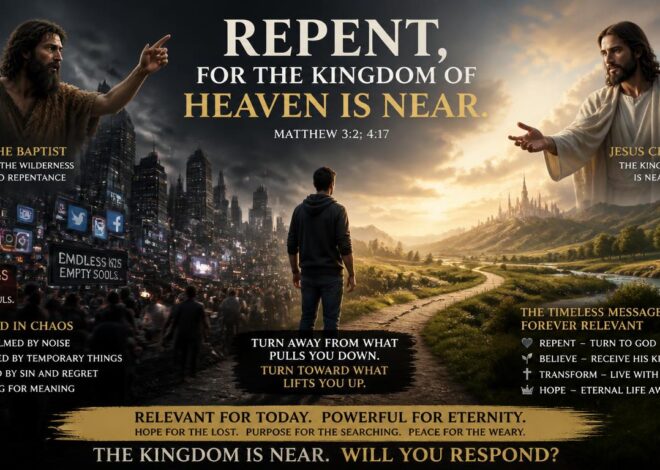
The Ancient Call That Wakes the Modern Soul: Repentance and the Kingdom Today