
End Times Iran: From Ancient Persia to Biblical Prophecy
The nation of Iran occupies a unique position in biblical history and prophecy. From its earliest appearance as Elam in the book of Genesis to its dramatic role in end times prophecy, Iran—known biblically as Persia and Media—demonstrates God’s sovereign control over nations and His unwavering faithfulness to His covenant people, Israel.
This comprehensive exploration traces Iran’s biblical journey, examining how God worked through ancient Persian kings to fulfill His purposes and what Scripture reveals about Iran’s role in the last days.
Iran in Early Biblical History: The Foundation
Elam: The Earliest Mention
The region corresponding to modern Iran first appears in Scripture through Elam, a son of Shem mentioned in Genesis 10:22. The Elamites emerged as a prominent power in ancient Mesopotamia, demonstrating their regional influence early in biblical history.
Genesis 14:1, 9 records a significant military encounter: “In the days of Amraphel king of Shinar, Arioch king of Ellasar, Chedorlaomer king of Elam, and Tidal king of Goiim… against Chedorlaomer king of Elam, Tidal king of Goiim, Amraphel king of Shinar, and Arioch king of Ellasar—four kings against five.” This passage reveals Elam’s early regional influence and even shows them engaging in battle with Abraham’s forces.
Daniel’s Prophetic Visions of the Medo-Persian Empire
Centuries before Persia rose to power, the prophet Daniel received divine visions that accurately foretold the rise of the Medo-Persian Empire. These prophecies demonstrate God’s foreknowledge and sovereign control over world history.
The Statue Dream (Daniel 2:31-45): Daniel interpreted King Nebuchadnezzar’s dream of a great statue, where the chest and arms of silver represented the Medo-Persian Empire that would succeed Babylon (the head of gold). This vision outlined a succession of world empires, with Persia playing a crucial role in God’s plan.
The Ram and Goat Vision (Daniel 8:20): Daniel 8:20 explicitly identifies the vision’s meaning: “The ram which you saw with the two horns are the kings of Media and Persia.” This vision vividly describes Persia’s conquest of other nations and the precision of biblical prophecy concerning Iran.
The Persian Empire in Scripture (539-330 BC)
The most extensive period of Iran’s biblical presence occurred during the Persian Empire, when the nation became deeply intertwined with Israel’s return from Babylonian exile and the restoration of Jerusalem.
Cyrus the Great: God’s Anointed Shepherd
After conquering Babylon in 539 BC, King Cyrus issued a groundbreaking decree allowing the exiled Jews to return to Jerusalem and rebuild their Temple. This act fulfilled prophecies from Isaiah, written approximately two centuries before Cyrus was even born.
Isaiah 44:28 declares: “Who says of Cyrus, ‘He is my shepherd, and he shall fulfill all my purpose’; saying of Jerusalem, ‘She shall be built,’ and of the temple, ‘Your foundation shall be laid.’”
Even more remarkably, Isaiah 45:1 calls Cyrus God’s “anointed” (Messiah in Hebrew), a term typically reserved for Israelite kings or the ultimate Messiah, Jesus Christ. Isaiah 45:4-5 clarifies God’s purpose: “For Jacob My servant’s sake, and Israel My elect, I have even called you by your name; I have named you, though you have not known Me. I am the Lord, and there is no other; there is no God besides Me. I will gird you, though you have not known Me.”
Ezra 1:1-4 records the fulfillment of this prophecy when Cyrus issued his decree, marking a pivotal moment in Jewish history and demonstrating God’s ability to work through anyone—even pagan kings—to accomplish His purposes.
The Books of Ezra and Nehemiah: Persian Support for Restoration
The books of Ezra and Nehemiah detail the return of Jewish exiles under the leadership of Zerubbabel, Ezra, and Nehemiah—all facilitated by Persian kings including Darius I and Artaxerxes I. The rebuilt Temple and walls of Jerusalem stood as monuments to Persian policy and God’s faithfulness to His covenant promises.
These historical accounts demonstrate how God used the Persian Empire to preserve the Jewish people and their worship, ensuring the lineage through which the Messiah would eventually come remained intact.
The Book of Esther: God’s Providence in Persia
The entire book of Esther takes place in the Persian capital of Susa (also known as Shushan) during the reign of King Ahasuerus, identified with Xerxes I. Esther 1:1-2 sets the scene: “Now it came to pass in the days of Ahasuerus (this was the Ahasuerus who reigned over one hundred and twenty-seven provinces, from India to Ethiopia), in those days when King Ahasuerus sat on the throne of his kingdom, which was in Shushan the citadel…”
This account highlights God’s sovereign hand in protecting His people even in a foreign land, demonstrating His providence and faithfulness regardless of geographic or political circumstances.
God’s Sovereignty: Using Pagan Kings Like Cyrus
The use of pagan kings like Cyrus to fulfill God’s divine purposes powerfully demonstrates His absolute control over history and His ability to work through anyone, regardless of their personal faith or awareness of Him. This theological truth reveals several profound principles:
God’s Absolute Sovereignty and Omnipotence
Scripture clearly teaches that God reigns supreme over all nations and rulers, not just over Israel. Psalm 103:19 declares: “The Lord has established His throne in heaven, and His kingdom rules over all.” No human authority, regardless of its power, operates outside God’s ultimate oversight.
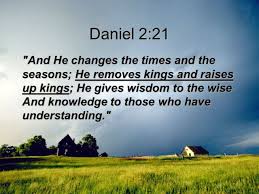
Daniel 2:21 reinforces this truth: “And He changes the times and the seasons; He removes kings and raises up kings; He gives wisdom to the wise and knowledge to those who have understanding.” Cyrus’s rise and actions were not mere historical accidents but part of God’s deliberate plan.
God’s Use of Unlikely Instruments
One striking aspect of God’s character is that He often works through those who do not know Him or consciously serve Him. He is not limited to using only believers. Isaiah 45:1 calls Cyrus God’s “anointed” (Messiah in Hebrew), a term typically reserved for Israelite kings or the ultimate Messiah, Jesus.
Isaiah 45:4-5 further clarifies this remarkable reality: “For Jacob My servant’s sake, and Israel My elect, I have even called you by your name; I have named you, though you have not known Me. I am the Lord, and there is no other; there is no God besides Me. I will gird you, though you have not known Me.”
This passage reveals that God appointed Cyrus, prepared him, and worked through him despite Cyrus’s ignorance of the one true God. Cyrus’s personal motivations were likely political or pragmatic—maintaining peace in his empire or gaining favor with regional deities—but God used those very motivations to accomplish His redemptive purpose for Israel.
Fulfillment of Prophecy and God’s Foreknowledge
The fact that God explicitly named Cyrus nearly two centuries before he was born (Isaiah 44:28, Isaiah 45:1) serves as powerful testament to His omniscient nature and precise control over history. This demonstrates that God’s plans are immutable and will come to pass exactly as He declared them.
When these prophecies were fulfilled, it served as undeniable evidence to the exiled Jews—and to believers today—that the God of Israel is the one true God, and His Word is entirely trustworthy and inerrant.
God’s Redemptive Plan for His People
The use of Cyrus was crucial for the restoration of Israel after the Babylonian exile. Through Cyrus’s decree (Ezra 1:1-4), the Jews were allowed to return to Jerusalem, rebuild the Temple, and re-establish their covenant relationship with God in their homeland. This preserved the lineage through which the Messiah would eventually come.
Even in periods of judgment—like the Exile due to Israel’s disobedience—God’s grace and faithfulness endure. He provided a way for their return using an unexpected source, demonstrating that His commitment to His covenant is steadfast.
God’s use of pagan kings like Cyrus highlights that His purposes are grander than any human agenda, His power transcends all earthly authority, and His faithfulness to His promises is unwavering. It reminds us that even in the chaotic affairs of nations, God is always working to bring about His ultimate plan for humanity and His glory.
End Times Iran: The Prophetic Role in the Last Days
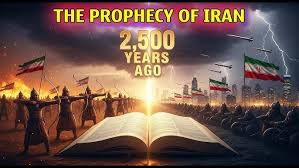
When examining the “end” from a biblical perspective, the region of Iran appears prominently in prophecies concerning the last days, particularly in the book of Ezekiel.
The Gog and Magog Confederacy
In Ezekiel 38 and 39, a coalition of nations is prophesied to attack Israel in the end times. Among the specific nations listed as allies of Gog from the land of Magog is Persia. Ezekiel 38:1-6 states:
“Now the word of the Lord came to me, saying, ‘Son of Man, set your face against Gog, of the land of Magog, the prince of Rosh, Meshech, and Tubal, and prophesy against him, and say, “Thus says the Lord God: Behold, I am against you, O Gog, the prince of Rosh, Meshech, and Tubal. I will turn you around, put hooks into your jaws, and lead you out, with all your army, horses, and horsemen, all splendidly clothed, all of them with bucklers and shields, all of them handling swords: Persia, Ethiopia, and Libya are with them, all of them with shield and helmet; Gomer and all its troops; the house of Togarmah from the far north and all its troops—many peoples with you.”’”
Many biblical scholars identify “Persia” in this passage with modern Iran. This prophecy describes a massive invasion of Israel that God Himself will decisively defeat, demonstrating His power and holiness to all nations.
This passage stands as one of the most direct and significant mentions of the region in end-time prophecy, connecting ancient Persia directly to eschatological events yet to unfold.
Conclusion: God’s Sovereignty Through the Ages
The land of Iran maintains a deep and continuous connection to biblical history, beginning with the earliest patriarchal narratives in Genesis and culminating in significant end-time prophecies in Ezekiel. Its story in Scripture powerfully underscores several unchanging truths:
First, God demonstrates absolute sovereignty over all nations. Whether working through Cyrus the Great to restore His people or orchestrating end-times events involving modern Iran, God remains in complete control of history.
Second, God’s faithfulness to His covenant people, Israel, never wavers. From providing deliverance through Persian kings to promising ultimate protection against end-times invasion, God’s commitment to His promises endures.
Third, biblical prophecy demonstrates remarkable precision and reliability. The fulfillment of prophecies concerning Cyrus and Persia validates Scripture’s divine authorship and gives us confidence in prophecies yet to be fulfilled.
Finally, God’s purposes transcend human understanding and political agendas. He uses whom He wills—believer and unbeliever alike—to accomplish His redemptive plan for humanity.
As we observe current events in the Middle East and particularly in Iran, Christians can find confidence in knowing that God remains sovereign, His Word remains true, and His plans will unfold exactly as He has declared. The biblical narrative of Iran from beginning to end reminds us that our God reigns over nations, controls the course of history, and will ultimately bring His purposes to completion for His glory and the salvation of His people.
Understanding Iran’s biblical significance helps us interpret current events through the lens of Scripture and strengthens our confidence in God’s sovereign plan for the ages.
Stay Connected & Grow in Faith
Thank you for taking time to read this message. God’s Word continues to speak beyond the written page—through worship, teaching, and faithful voices that proclaim His truth.
We invite you to stay connected with our ministry through our Christian Radio: Radio Christian Truth and Christian TV: Faros TV,where you’ll find Christ-centered worship, biblical teaching, and encouraging programs designed to strengthen your faith and deepen your walk with Jesus.
🎧 Listen to Christian Radio
📺 Watch Christian TV
May the Lord bless you as you seek Him daily, and may His Word guide, encourage, and transform your life.
Now thanks be unto God, which always causeth us to triumph in Christ (2 Corinthians 2:14).
God gets His greatest victories out of apparent defeats. Very often the enemy seems to triumph for a little, and God lets it be so; but then He comes in and upsets all the work of the enemy, overthrows the apparent victory, and as the Bible says, "turns the way of the wicked upside down." Thus He gives a great deal larger victory than we would have known if He had not allowed the enemy, seemingly, to triumph in the first place.
The story of the three Hebrew children being cast into the fiery furnace is a familiar one. Here was an apparent victory for the enemy. It looked as if the servants of the living God were going to have a terrible defeat. We have all been in places where it seemed as though we were defeated, and the enemy rejoiced. We can imagine what a complete defeat this looked to be. They fell down into the flames, and their enemies watched them to see them burn up in that awful fire, but were greatly astonished to see them walking around in the fire enjoying themselves. Nebuchadnezzar told them to "come forth out of the midst of the fire." Not even a hair was singed, nor was the smell of fire on their garments, "because there is no other god that can deliver after this sort."
This apparent defeat resulted in a marvelous victory.
Suppose that these three men had lost their faith and courage, and had complained, saying, "Why did not God keep us out of the furnace!" They would have been burned, and God would not have been glorified. If there is a great trial in your life today, do not own it as a defeat, but continue, by faith, to claim the victory through Him who is able to make you more than conqueror, and a glorious victory will soon be apparent. Let us learn that in all the hard places God brings us into, He is making opportunities for us to exercise such faith in Him as will bring about blessed results and greatly glorify His name.
Discover more from My Blog-BesthomeBusiness
Subscribe to get the latest posts sent to your email.